Regional Adjustments to Blackjack Payout Ratios in International Online Gambling Markets
Viktor Krause · Oct 30, 2026
Regional Adjustments to Blackjack Payout Ratios in International Online Gambling Markets
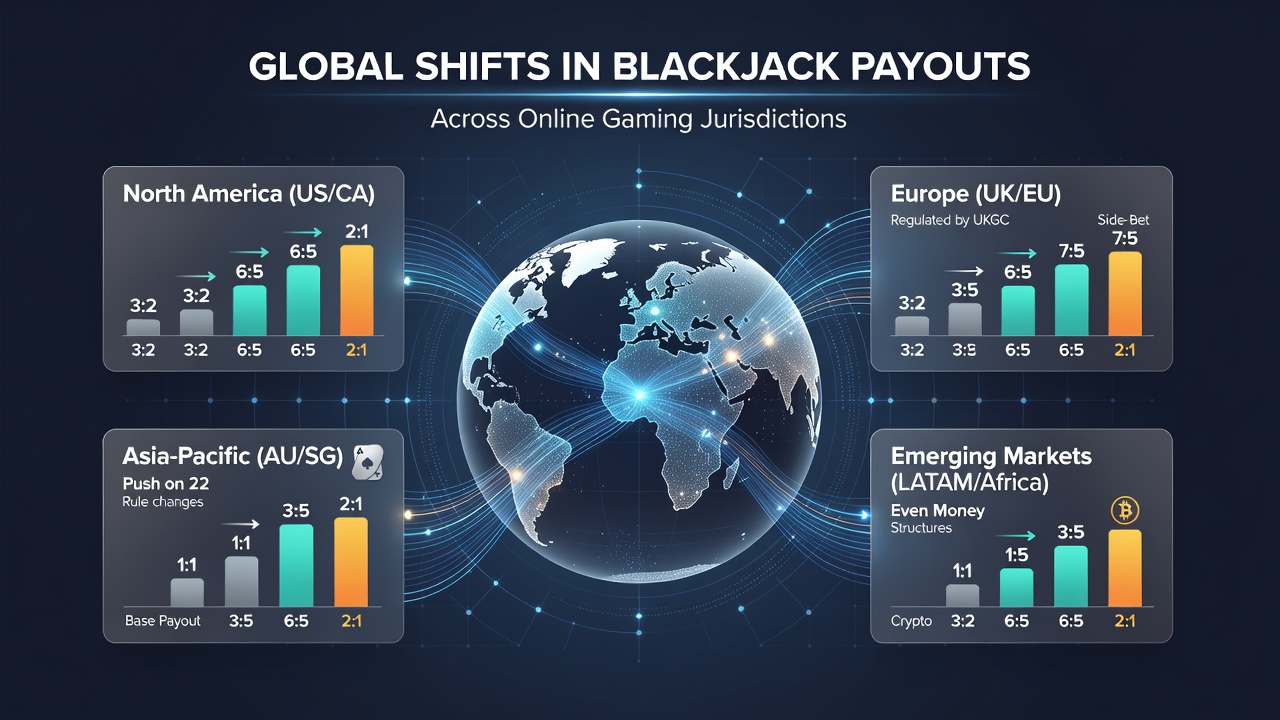
Blackjack payout structures have undergone measurable adjustments in multiple online gaming jurisdictions over the past decade, with operators adapting to regulatory frameworks that differ sharply by region. Data from licensing authorities shows these changes often center on the ratio offered for a natural blackjack, shifting from the traditional 3:2 to 6:5 in certain markets, while others maintain older standards through specific licensing conditions. Those who track these patterns note that the alterations reflect both revenue goals and compliance requirements rather than uniform global policy.
North American Developments
In the United States, state-level regulators have introduced varying payout mandates for online blackjack platforms operating under their oversight. New Jersey's Division of Gaming Enforcement, for example, permits operators to offer 6:5 payouts on select tables provided clear disclosure appears in game rules, and figures from the agency indicate this option appears more frequently in lower-stakes environments. Pennsylvania's gaming control board has followed a similar path, allowing flexibility while requiring annual reporting on payout distributions. Observers note that these state-by-state differences create a patchwork where players encounter inconsistent ratios depending on the licensed site they access.
Canadian provinces present another layer of variation. Ontario's Alcohol and Gaming Commission has maintained 3:2 as the default for regulated online blackjack since the launch of its iGaming framework, yet data shows some offshore-facing platforms accessible to Canadian players experiment with reduced ratios under different licensing regimes. Reports from the Canadian Gaming Association highlight how cross-border access complicates direct comparisons, because players may encounter both models within the same calendar year.
European and Asian Market Shifts
European jurisdictions operate under distinct national rules that influence payout structures directly. The Malta Gaming Authority requires operators to publish payout percentages and any deviations from 3:2, with recent filings showing a gradual increase in 6:5 tables on platforms targeting multiple EU countries. In contrast, several Scandinavian regulators have upheld stricter adherence to traditional ratios through license conditions that limit modifications without prior approval. Researchers at the European Gaming and Betting Association have compiled statistics indicating these differences affect average return-to-player calculations across borders.
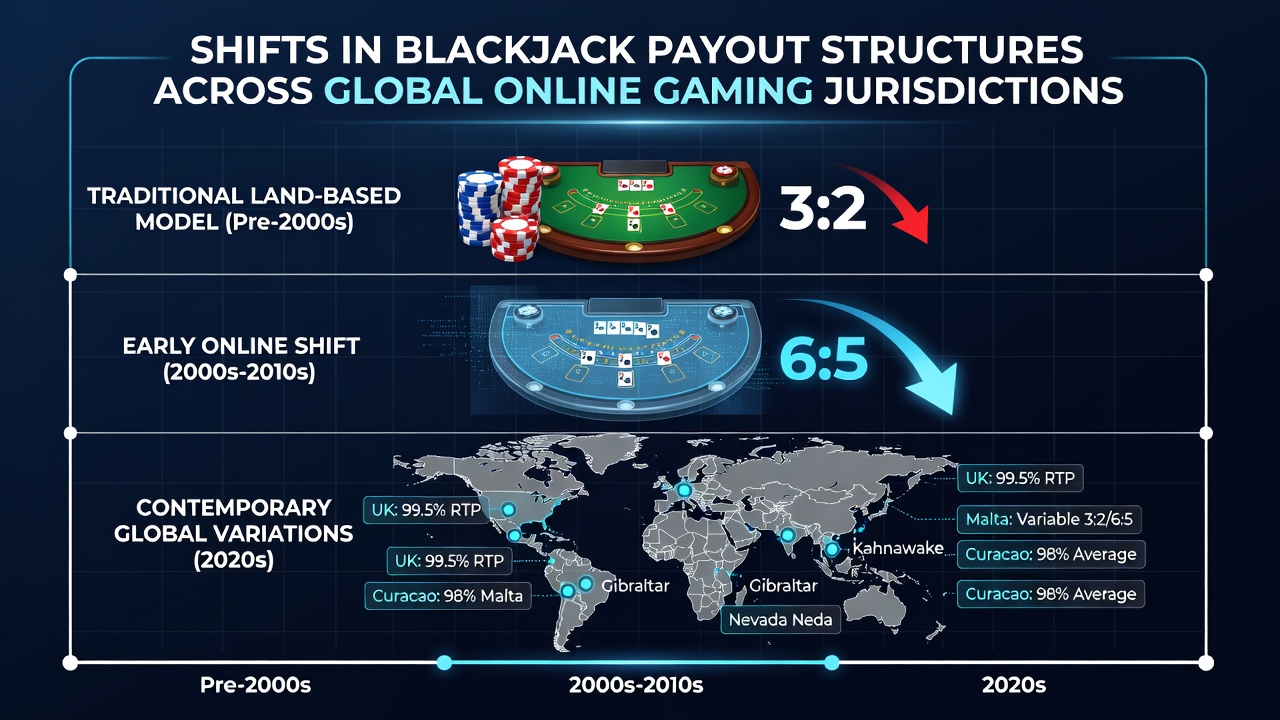
Asian markets add further complexity through their own regulatory approaches. In jurisdictions such as the Philippines, the Philippine Amusement and Gaming Corporation oversees online platforms and has documented a mix of payout structures, with some operators applying 6:5 to attract volume while others retain 3:2 to differentiate premium offerings. Australian authorities, through the Australian Communications and Media Authority, have focused more on transparency requirements than ratio caps, allowing operators to set terms as long as clear information reaches players before wagering begins. Those who study these markets point out that the resulting landscape rewards operators who monitor multiple license conditions simultaneously.
Regulatory Influences Emerging in 2026
October 2026 marks the scheduled implementation date for updated reporting standards in several jurisdictions, including revised disclosure rules from the New Jersey Division of Gaming Enforcement and parallel updates under the Malta Gaming Authority framework. These changes require more granular data on how often reduced payouts appear across game variants, and preliminary guidance suggests operators must segment statistics by player tier. Industry reports indicate this level of detail could standardize comparisons that currently remain fragmented across regions.
Additional adjustments appear tied to responsible gaming measures. Certain regulators now link payout transparency to player protection protocols, requiring alerts when a table deviates from 3:2. Data collected through these programs shows measurable differences in session length depending on the ratio displayed, though the underlying mechanisms remain under continued review by academic and industry researchers alike.
Conclusion
Shifts in blackjack payout structures continue to reflect the interplay between local licensing rules and operator strategies across global online gaming jurisdictions. Regional authorities maintain distinct approaches that produce measurable differences in available ratios, while upcoming reporting requirements scheduled for October 2026 may bring greater consistency to how those differences are documented. Those who follow regulatory filings observe that the current environment rewards careful attention to jurisdiction-specific conditions rather than assumptions of uniformity.